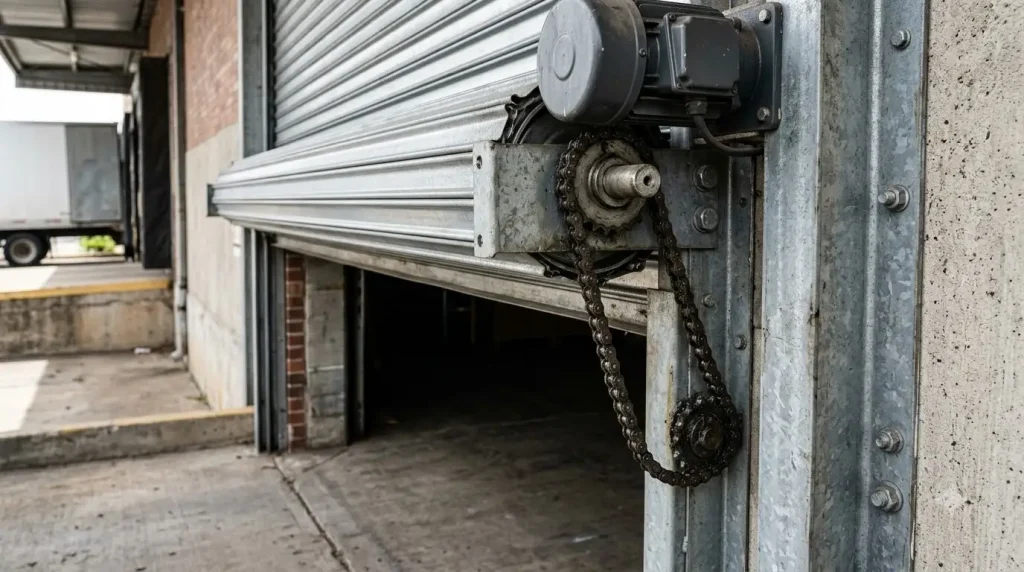
How to Vet Industrial Shutter Manufacturers Before You Place an Order

Most industrial shutter quotations look the same at first glance — same rough price, same promised delivery window, same list of features. The differences only show up later, usually at the worst possible time: a motor that stalls during peak dispatch hours, a curtain that jams after the first heavy rain, or a warranty claim that gets stuck in email back-and-forth for weeks.

If you’re comparing industrial shutter manufacturers for a warehouse, factory, or loading dock in Hyderabad, the goal isn’t finding the lowest quote. It’s finding the manufacturer whose shutters are still working exactly as promised two years in. This guide walks through what to actually check before you sign a purchase order — the details that separate a shutter that lasts from one that becomes a maintenance headache.

Why the Manufacturer Matters More Than the Product Sheet

Two shutters can carry near-identical spec sheets — same curtain thickness, same motor rating — and still perform completely differently on site. That gap almost always comes down to manufacturing consistency: how the steel is rolled, how tightly the guide rails are toleranced, how the motor is calibrated before it leaves the factory.

A manufacturer with proper quality control catches these issues before installation. A fabricator working purely to a price point often doesn’t catch them at all — and you find out only after the shutter has been running for a few months.

What to Check Before Choosing an Industrial Shutter Manufacturer

1. Curtain Gauge and Material Grade

Ask for the exact steel gauge in mm, not a general description like “heavy duty.” Industrial applications — loading bays, factory openings, warehouse entrances — typically need thicker gauge steel than what’s used for smaller commercial shutters. Confirm whether it’s galvanized steel, since that affects corrosion resistance significantly in humid conditions.

2. Motor Specifications and Duty Cycle

For automatic and motorized shutters, ask about the motor’s duty cycle rating — how many open-close cycles per day it’s built to handle. A motor rated for occasional residential use will fail quickly on a warehouse door that opens dozens of times daily.

3. Guide Rail and Housing Quality

Shutters jam far more often at the guide rails than at the curtain itself. Ask how the rails are fabricated and whether they’re designed with tolerance for slight structural movement, which is common in large industrial buildings.

4. Fire Rating Documentation (Where Applicable)

If the shutter needs to meet fire safety requirements for a specific opening, ask for the actual test certificate matching that exact shutter model — not a general company certification. This detail matters when your building faces a fire safety audit.

5. Installation Team Experience

A shutter is only as good as its installation. Ask whether the manufacturer installs with its own trained team or subcontracts to whoever’s available. Misaligned installation causes most early-life shutter problems, regardless of product quality.

6. Warranty Terms in Writing

Get specifics: what’s covered on the motor, what’s covered on the curtain, and for how long. A vague “one year warranty” verbal promise means little if a claim actually needs to be processed.

7. After-Sales Response Time

Ask how quickly the manufacturer responds to a service call once a shutter is in use. For a warehouse, a jammed shutter can halt dispatch operations entirely — response time matters as much as product quality.

Benefits of Choosing an Established Industrial Shutter Manufacturer

  • Fewer breakdowns over time — proper motor calibration and rail tolerances mean less wear from daily cycling.
  • Faster service response — an established manufacturer has a service team that knows the product, not a third party guessing at the fix.
  • Documented compliance — genuine fire ratings and certificates that hold up during safety audits.
  • Consistent bulk order quality — every shutter in a multi-unit warehouse project matches in performance, not just appearance.
  • Realistic delivery commitments — a manufacturer with real production capacity gives dates they can actually meet.

Why Choose Buildwick for Industrial Shutters

  • Fewer breakdowns over time — proper motor calibration and rail tolerances mean less wear from daily cycling.
  • Faster service response — an established manufacturer has a service team that knows the product, not a third party guessing at the fix.
  • Documented compliance — genuine fire ratings and certificates that hold up during safety audits.
  • Consistent bulk order quality — every shutter in a multi-unit warehouse project matches in performance, not just appearance.
  • Realistic delivery commitments — a manufacturer with real production capacity gives dates they can actually meet.

Common Mistakes Businesses Make When Ordering Industrial Shutters

  • Fewer breakdowns over time — proper motor calibration and rail tolerances mean less wear from daily cycling.
  • Faster service response — an established manufacturer has a service team that knows the product, not a third party guessing at the fix.
  • Documented compliance — genuine fire ratings and certificates that hold up during safety audits.
  • Consistent bulk order quality — every shutter in a multi-unit warehouse project matches in performance, not just appearance.
  • Realistic delivery commitments — a manufacturer with real production capacity gives dates they can actually meet.

Latest Trends in Industrial Shutter Manufacturing

  • Fewer breakdowns over time — proper motor calibration and rail tolerances mean less wear from daily cycling.
  • Faster service response — an established manufacturer has a service team that knows the product, not a third party guessing at the fix.
  • Documented compliance — genuine fire ratings and certificates that hold up during safety audits.
  • Consistent bulk order quality — every shutter in a multi-unit warehouse project matches in performance, not just appearance.
  • Realistic delivery commitments — a manufacturer with real production capacity gives dates they can actually meet.

Expert Tips for a Smooth Shutter Purchase

  • Fewer breakdowns over time — proper motor calibration and rail tolerances mean less wear from daily cycling.
  • Faster service response — an established manufacturer has a service team that knows the product, not a third party guessing at the fix.
  • Documented compliance — genuine fire ratings and certificates that hold up during safety audits.
  • Consistent bulk order quality — every shutter in a multi-unit warehouse project matches in performance, not just appearance.
  • Realistic delivery commitments — a manufacturer with real production capacity gives dates they can actually meet.

Questions

A fabricator typically welds to rough specifications without engineered tolerances or quality checks, while a manufacturer works from calibrated processes with consistent gauge, motor calibration, and documented quality control across units.
Share your expected daily open-close frequency with the manufacturer and ask for a motor duty cycle recommendation matched to that usage, rather than accepting a generic motor size.
Requirements depend on the building's occupancy type and specific fire safety norms applicable to it. It's best to confirm with your fire safety consultant which openings in your facility need rated shutters.
This depends on the number of units and site readiness, but manufacturers with their own installation teams generally complete work faster and with fewer alignment issues than those relying on subcontractors.
Warranty terms vary by manufacturer and are often split between the motor, curtain, and installation. Always get these terms in writing rather than relying on a verbal assurance.
Yes, a proper manufacturer can fabricate to custom dimensions, though it's important to confirm this during the site visit so measurements are accurate before production starts.
Motor strain from mismatched duty cycles and misaligned guide rails from poor installation are the two most common causes, more so than the curtain material itself.
Many manufacturers offer annual maintenance contracts for bulk or commercial clients, which is worth discussing upfront if you're managing multiple shutters across a facility.

Conclusion

An industrial shutter is a mechanical system with a motor, moving parts, and daily wear — not a static panel. The manufacturers worth working with are the ones who treat it that way: matching motor specifications to real usage, controlling gauge and rail tolerances, documenting warranties properly, and showing up quickly when something needs fixing. Getting these details right before you order costs nothing and saves considerably more than chasing the lowest quote ever does.

Strong Call-to-Action

If you’re comparing industrial shutter manufacturers for a warehouse, factory, or loading dock in Hyderabad, talk to Buildwick before finalizing your order. Share your facility’s daily usage and opening sizes, and we’ll recommend the right specification and walk you through warranty and installation details upfront — not after something goes wrong. Get in touch for a site visit and detailed quotation.