Fire Safety Doors Manufacturers in Hyderabad What Compliance Buyers Need to Check

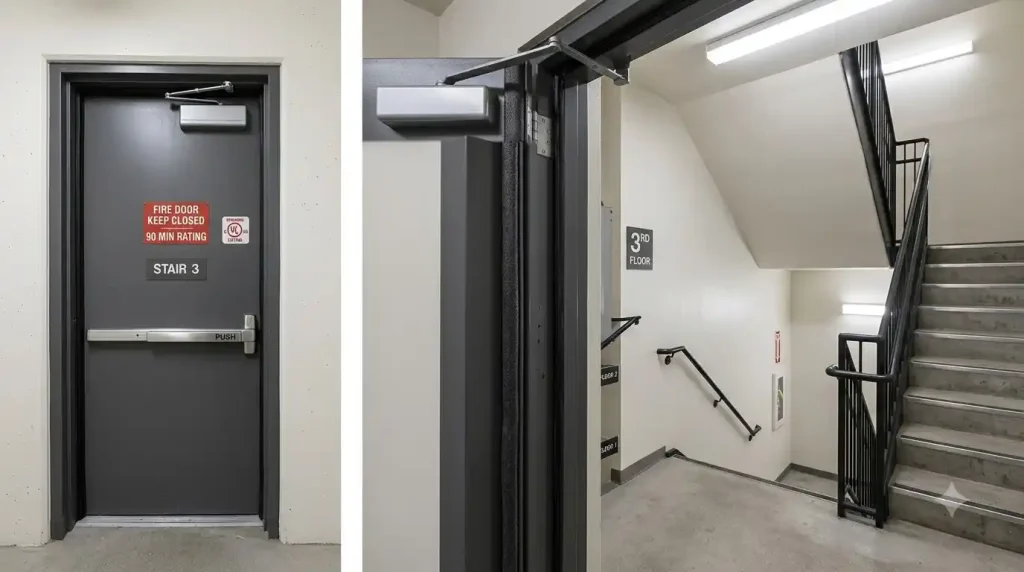
Fire safety doors manufacturers in Hyderabad certified fire rated steel door assembly

A fire safety door is one of the few building components where a manufacturing shortcut isn’t just a durability risk — it’s a life-safety failure waiting to happen at the exact moment it matters most. Unlike most door specifications, where a slightly wrong gauge or finish is an inconvenience, a fire door that doesn’t meet its rated performance can fail to contain fire and smoke during an actual emergency, undermining the entire compartmentation strategy a building’s fire safety plan depends on.

For architects, fire consultants, facility managers, and contractors sourcing fire safety doors manufacturers in Hyderabad, the evaluation criteria are different from a standard commercial door purchase. This guide covers what certification and testing documentation to demand, how fire door assemblies actually work, and what separates a manufacturer who understands compliance from one who’s simply selling a heavier door.

Why Fire Safety Doors Are a Different Category of Specification

Standard commercial and residential steel doors are judged on gauge, finish, and hardware quality. Fire safety doors carry all of that plus a requirement none of the others have: a tested, certified performance rating for containing fire and smoke for a defined duration.

This changes the buying process in a few important ways:

  • The whole assembly is rated, not just the leaf — a fire door’s rating applies to the leaf, frame, hinges, closer, and seals tested together as one unit
  • Documentation isn’t optional — a fire safety door without a valid test certificate doesn’t meet code, regardless of how it looks or feels
  • Installation affects the rating — even a certified assembly can lose its rating if installed incorrectly, with the wrong gap tolerances or incompatible hardware substitutions
  • Inspection and renewal matter — fire doors typically need periodic inspection to confirm the assembly still performs as certified, not just a one-time installation check

What a Genuine Fire Safety Doors Manufacturer in Hyderabad Should Provide

Test Certification for the Complete Assembly

Ask specifically for the fire test certificate covering the leaf, frame, and hardware combination you’re ordering — not a generic certificate for the leaf material alone. A door leaf tested independently doesn’t guarantee the same performance once paired with a different frame or hardware set.

Core Material Suited to the Rating

Fire-rated doors typically use a mineral wool or rock wool core designed to resist heat transfer and maintain structural integrity during a fire event. A manufacturer should be able to state the core material and rating duration clearly — commonly up to 120 minutes for commercial and industrial applications — rather than leaving it vague on the quotation.

Smoke Seal Compliance

Beyond fire resistance, smoke seals prevent smoke infiltration through door gaps, which is often the more immediate life-safety concern during a fire event, since smoke inhalation causes more casualties than flame exposure in most building fires. Confirm smoke seal specifications are included in the certified assembly.

Hardware Compatibility

Closers, hinges, and locking hardware need to be compatible with the certified assembly. Substituting standard hardware onto a fire-rated leaf, even for aesthetic or cost reasons, typically breaks the certification. A manufacturer who understands this will flag it directly rather than accommodate a substitution without explanation.

Installation Support and Tolerances

Fire door performance depends on installation matching the tested tolerances — gap sizes between the door and frame, threshold clearances, and correct hardware placement all matter. A manufacturer offering installation support or clear installation specifications reduces the risk of an on-site error compromising the rating.

Where Fire Safety Doors Are Required

  • Stairwell enclosures, protecting the primary escape route during a fire event
  • Compartmentation walls, separating a building into fire-resistant zones to slow fire spread
  • Corridors and escape routes, particularly in multi-storey commercial and residential buildings
  • Server rooms and electrical rooms, where a contained fire risk needs isolation from the rest of the building
  • Hospitals and healthcare facilities, where evacuation isn’t always immediate and compartmentation buys critical time
  • High-rise residential and commercial buildings, where fire safety codes typically mandate rated doors at multiple points

Buildwick Fire Safety Doors Manufactured in Hyderabad

Buildwick manufactures fire rated doors at its Hyderabad and Dindigul facilities, using CNC-precision equipment for consistent assembly fit. The company is ISO 9001:2015 and ISO 3614 certified, with over 4,000 completed projects and an 80% repeat and referral client base across commercial, industrial, and institutional sectors.

For architects and facility managers specifying fire safety doors in Hyderabad, that means:

  • Assembly-tested certification available directly, not a vague reference to compliance
  • Core material and rating duration stated clearly for each fire door specification
  • Compatible hardware supplied as part of the certified assembly, not substituted separately
  • Local manufacturing support for installation guidance and any post-installation adjustment

Projects requiring fire compliance across multiple door categories can also source scientific doors for lab and hospital environments and shaft doors for utility access points from the same manufacturer, keeping certification standards consistent across the building.

Latest Trends in Fire Safety Door Compliance

  • Stricter documentation requests at tender stage — architects and fire consultants are increasingly requiring test certificates before finalizing a supplier, rather than accepting verbal assurance.
  • Growing scrutiny during building inspections — fire safety audits are checking installed assemblies against certification more rigorously than in previous years, making correct installation as important as correct manufacturing.
  • Consolidated sourcing for compliance consistency — projects are increasingly sourcing all fire-rated openings from one certified manufacturer to simplify documentation and reduce inconsistency across a building.
  • Periodic inspection becoming standard practice — facility managers are adopting scheduled fire door inspections rather than treating certification as a one-time installation event.

Common Mistakes When Sourcing Fire Safety Doors

  • Accepting a leaf-only certificate without confirming the full assembly — frame, hardware, and seals — is covered by the same rating.
  • Substituting hardware for cost or aesthetic reasons without realizing it can invalidate the certified assembly.
  • Skipping installation tolerance checks, assuming a certified product automatically performs correctly regardless of how it’s installed.
  • Not scheduling periodic inspection, missing wear or damage that could compromise the door’s rated performance over time.
  • Choosing based on price alone without comparing documented rating duration and core material between suppliers.

Expert Tips for Compliance-Driven Buyers

  • Request the fire test certificate before finalizing any order, and confirm it covers the exact leaf, frame, and hardware combination you’re purchasing.
  • Involve your fire consultant early in the specification process, not just at final inspection.
  • Ask your manufacturer directly whether hardware substitutions are compatible with the certified assembly before making any changes.
  • Build periodic fire door inspection into your facility’s maintenance schedule, not just your initial installation checklist.
  • For multi-building or multi-floor projects, standardize on one fire safety door specification and manufacturer to simplify documentation during compliance audits.

Questions

It indicates how long a tested door assembly — leaf, frame, hardware, and seals together — can contain fire and smoke, commonly rated up to 120 minutes for commercial applications.
The certified frame and compatible hardware are required; a fire-rated leaf paired with an unrated frame does not meet compliance, even if the leaf itself is manufactured correctly.
Yes. Buildwick manufactures fire rated doors at its own Hyderabad and Dindigul facilities as part of its ISO 9001:2015 and ISO 3614 certified manufacturing process.
Stairwells, compartmentation walls, escape corridors, server and electrical rooms, and hospital or high-rise buildings commonly require fire-rated doors as part of code compliance.
Generally not without checking compatibility first — standard hardware substitutions can invalidate the door's certified fire rating.
Periodic inspection is recommended as part of a facility's ongoing maintenance schedule to confirm the assembly still performs as certified, rather than assuming a one-time installation check is sufficient.

Contact Buildwick at +91 98483 12000 or enquiry@buildwick.net, or use the contact page to submit your project's compliance requirements for a specification review.

Conclusion

Fire safety doors manufacturers in Hyderabad need to be evaluated on documentation and certified assembly performance, not just build quality alone. A door that looks identical to a standard commercial steel door but lacks proper testing, core material, or compatible hardware doesn’t meet the life-safety function it’s specified for. Working with a manufacturer who can produce assembly-tested certification directly — and who understands how installation tolerances affect that rating — removes the compliance risk that comes from treating a fire safety door like any other commercial specification.

Strong Call-to-Action

Specifying fire safety doors for a compliance-driven project in Hyderabad? Contact Buildwick at +91 98483 12000 for certified assembly documentation and a specification review.