Fire-Rated Steel Doors Manufacturers — The Certification Checklist Most Buyers Skip

A fire-rated door that hasn’t actually been tested is worse than no fire door at all, because it gives everyone in the building false confidence during an emergency. Yet this happens more often than it should — a builder gets a verbal assurance that a door is “fire rated,” it goes into the building, and nobody checks the paperwork until a fire safety audit comes around and asks for a certificate that doesn’t exist.

This isn’t a general introduction to what fire-rated doors are or why they matter — your building’s fire safety consultant has probably already covered that. This is a checklist for verifying that fire-rated steel doors manufacturers you’re considering can actually back up their claims with documentation that holds up, not just a sales pitch that sounds compliant.

Why "Fire Rated" on a Quotation Isn't Enough

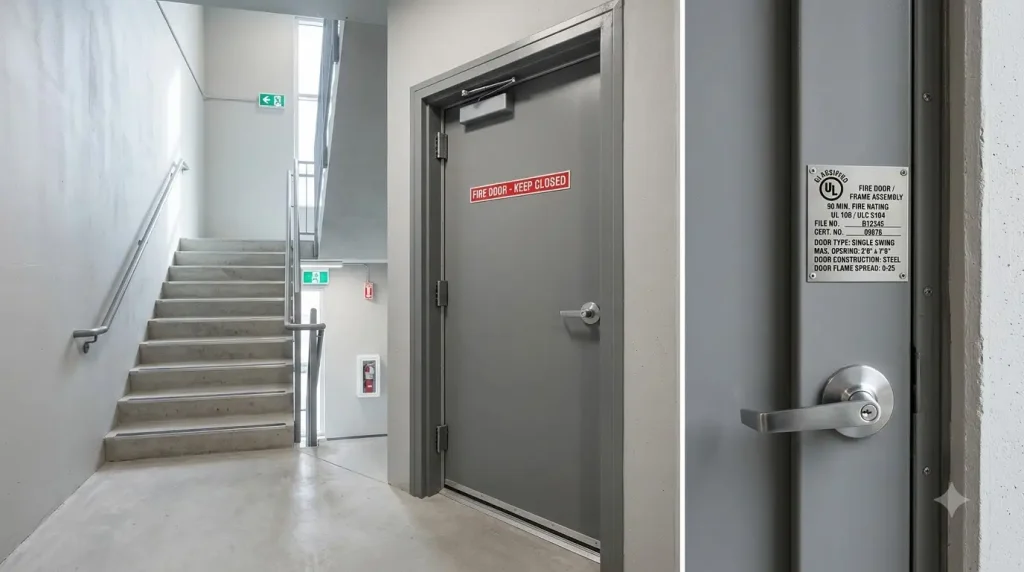
The phrase “fire rated” gets used loosely in the door industry. A door can be built with fire-resistant materials and still not carry an actual rating, because the rating comes from testing the complete assembled unit — door, frame, hardware, and seals together — not from the raw material alone.

This matters because auditors and fire departments don’t take a manufacturer’s word for it. They ask for a test certificate tied to the specific door model installed. If that certificate doesn’t exist, or doesn’t match what’s actually on site, the door doesn’t count as compliant regardless of what it was sold as.

The Certification Checklist to Run Past Any Manufacturer

1. Ask for the Actual Test Certificate, Not a Company Certification

There’s a difference between a company holding an ISO certification for its manufacturing process and a specific door model holding a fire test certificate from a recognized testing agency. Ask for the latter, specific to the door you’re buying.

2. Confirm the Certificate Matches the Exact Door Specification

A test certificate is only valid for the exact configuration that was tested — same thickness, same core, same frame type, same hardware. If any of those details differ from what you’re ordering, the certificate technically doesn’t apply, even if the manufacturer says it’s “basically the same door.”

3. Check the Rating Duration Required for Your Building

Fire door ratings are typically expressed in time — how long the door resists fire spread. Different areas of a building (stairwells, utility rooms, server rooms) often require different rating durations. Confirm with your fire safety consultant what’s needed where, and make sure the manufacturer’s certified rating matches.

4. Verify the Frame and Hardware Are Included in the Certification

A fire-rated door panel installed with an uncertified frame or standard hinges and hardware may not perform as tested. Ask whether the certification covers the complete door set — panel, frame, hinges, and closer — or just the panel in isolation.

5. Ask How the Manufacturer Documents Batch Consistency

For bulk orders, ask how the manufacturer ensures every unit in the batch matches the tested specification. A manufacturer with proper quality control can explain this clearly; one without it usually can’t.

6. Request Installation Guidelines Tied to the Certification

Fire-rated doors often have specific installation requirements — gap tolerances, seal placement — that are part of what makes the certification valid. Ask whether the manufacturer provides these guidelines and whether their installation team follows them.

7. Confirm Documentation Is Provided Before Building Handover

Don’t wait until an audit is scheduled to ask for certificates. Get documentation as part of the delivery package, so it’s on file well before anyone needs it.

Why This Checklist Matters More Than It Seems

Skipping this checklist doesn’t usually cause a problem immediately. Doors get installed, buildings get occupied, and everything looks fine — until a fire safety audit happens, an insurance claim gets reviewed, or worse, an actual fire tests the door for real. At that point, a missing or mismatched certificate isn’t a paperwork inconvenience. It can mean compliance violations, insurance disputes, or in the worst case, a door that simply doesn’t perform as intended.

Benefits of Working With Manufacturers Who Get This Right

  • Audit-ready documentation — certificates on file before anyone asks for them, not scrambled together afterward.
  • Genuine safety performance — a door that’s actually been tested as a complete assembly performs as expected, not just in theory.
  • Fewer compliance surprises — building handovers go smoothly when certification was verified upfront rather than assumed.
  • Insurance clarity — proper documentation supports claims rather than creating disputes over compliance.
  • Consistent quality across bulk orders — manufacturers with real quality control processes deliver batches that match the tested specification unit for unit.

Why Choose Buildwick Among Fire-Rated Steel Doors Manufacturers

Buildwick provides certification documentation matched to the exact door model supplied, not a general company certificate offered as a substitute. Site teams follow installation guidelines tied to the certified specification, which matters because a fire-rated door installed outside its tested parameters doesn’t perform the way its certificate implies.

For clients managing bulk orders across a building project, Buildwick maintains consistent specification from the first unit to the last, so documentation for one door in a batch genuinely applies to all of them. This consistency is backed by ISO 9001:2015 and ISO 3614 certification on the manufacturing side, alongside product-specific fire testing where applicable. Buildwick’s broader commercial door range follows the same documentation standard, which is worth reviewing if your project needs both fire-rated and standard commercial doors from a single supplier.

Common Mistakes Businesses Make With Fire Door Compliance

  • Accepting a verbal assurance instead of a certificate — only discovering the gap during an actual audit.
  • Assuming the panel certification covers the frame and hardware — when these often need to be certified as part of the same tested assembly.
  • Not checking rating duration requirements by location — installing a uniform rating across a building when different areas need different durations.
  • Ignoring installation guidelines tied to certification — a correctly certified door installed incorrectly may not perform as tested.
  • Filing documentation only after an audit is scheduled — leading to a scramble that sometimes reveals gaps too late to fix easily.

Expert Tips for Buyers and Facility Managers

  • Keep a dedicated compliance file for every fire-rated door in a building, organized by location and certificate.
  • Cross-check ratings with your fire safety consultant before finalizing an order, rather than after installation.
  • For large projects, request a single point of contact at the manufacturer for all compliance documentation, to avoid details getting lost across departments.
  • Schedule a periodic review of fire door documentation, especially for older buildings where records may not have been maintained consistently.
  • When in doubt, ask the manufacturer to walk through the certificate line by line rather than accepting a summary.

Questions

"Fire resistant" is often used loosely to describe materials that slow fire spread, while "fire rated" specifically means the complete door assembly has been tested and certified for a defined duration by a recognized testing agency.
Certificates are issued by recognized testing laboratories after assembly testing. It's best to confirm with your fire safety consultant which certifying bodies are accepted for your specific project and location.
A valid fire door certification typically covers the complete assembly — panel, frame, hardware, and seals — tested together. A panel-only certification doesn't guarantee the same performance once installed with different frame or hardware.
This can result in compliance violations and may require replacing or re-certifying the door, which is far more costly and disruptive than verifying certification before installation.
Often yes — requirements vary by location within a building, such as stairwells versus utility rooms. Your fire safety consultant can confirm the specific rating duration needed for each area.
Yes, and you should. A manufacturer confident in their compliance will provide this without hesitation, matched to the exact door model you're ordering.
Yes. Fire-rated doors often have specific installation tolerances, and improper installation can affect performance even if the door itself was properly certified.
It's good practice to review documentation periodically, especially before scheduled audits or renovations, to confirm records are complete and match the doors actually installed.

Conclusion

Fire-rated steel doors manufacturers earn trust through documentation, not descriptions. A door that’s genuinely certified for the exact specification installed protects a building the way it’s meant to; one that’s assumed to be compliant based on a verbal claim is a liability waiting to surface at the worst possible moment. Running through this checklist before an order is placed costs very little time compared to the disruption of failing an audit later.

Strong Call-to-Action

If you’re sourcing fire-rated steel doors for a commercial, industrial, or residential project in Hyderabad, talk to Buildwick before finalizing your supplier. We’ll walk you through the exact certification tied to your door specification and confirm it matches your building’s compliance requirements. Get in touch to review your project’s fire door needs.