
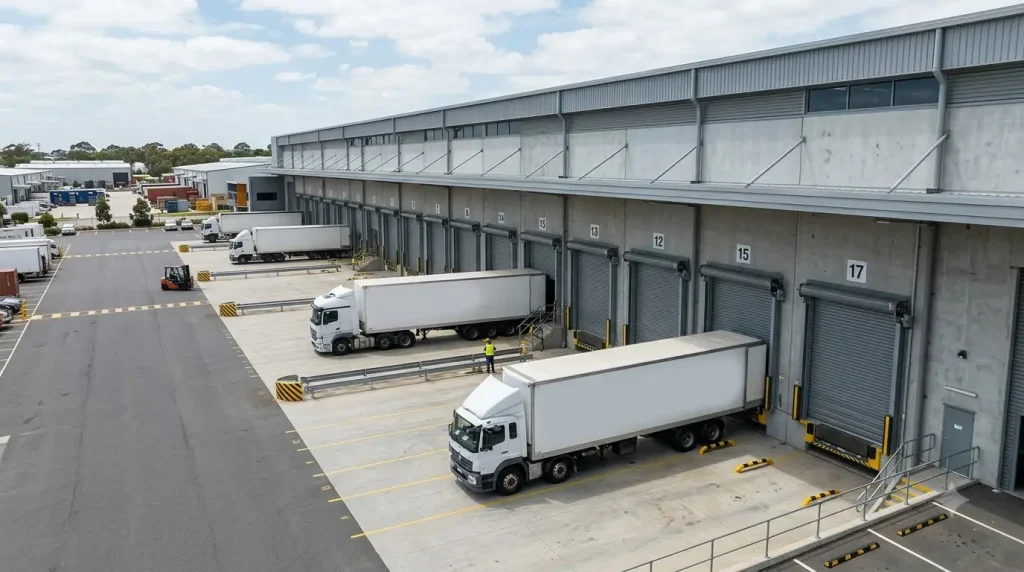
Drive along the Outer Ring Road today and you’ll see it: warehouse after warehouse, logistics park after logistics park, coming up faster than most people realize. Every one of those buildings needs doors — not the kind you’d fit on a home, but doors built to survive forklifts, weather exposure, and daily heavy use for years without complaint.
That’s exactly why sourcing from the right commercial steel doors suppliers has become a bigger decision than it used to be. A facility manager setting up a 3PL warehouse near Shamshabad, a factory owner expanding a unit in Patancheru, or a builder handing over a commercial complex in Kompally — all of them are now asking supplier questions that barely came up five years ago: Can you deliver at scale? Can you meet a fire safety deadline? Will these doors still open smoothly after two monsoons?
This piece looks at what’s actually driving that shift, and what to check before signing a bulk purchase order.
Hyderabad has become one of the busiest logistics corridors in South India, with fulfillment centers, cold storage units, and 3PL warehouses expanding steadily along the outskirts. Each new facility needs multiple entry points, loading bay doors and industrial shutters, and fire exits — all at commercial-grade steel specifications, not residential-grade.
Fire safety audits have tightened across commercial and industrial buildings, and that’s pushed many facilities to replace older doors that don’t meet current fire-rating requirements. Suppliers who can produce documented, tested fire-rated doors are seeing far more inquiries than those who can’t.
New manufacturing units, especially in electronics and pharma-adjacent industries around the city’s industrial belts, need doors that handle heavier daily traffic, dust control, and sometimes cold-chain requirements. That’s a very different specification from a standard office door.
For fire-rated or industrial-use doors, insist on certificates that match the specific door model you’re buying, especially if the building will face a fire safety audit later. A generic company certificate isn’t the same as a product-specific test report. This is one area where checking a supplier’s track record with commercial doors pays off — the paperwork habits usually match the product quality.
Buildwick works directly with builders, warehouse operators, and industrial clients across Hyderabad who need steel doors built to consistent manufacturing standards, not just doors that look good on installation day. Every bulk order goes through the same specification from the first unit to the last, so a fifty-door warehouse project doesn’t end up with visible inconsistencies between batches.
Site measurement happens before fabrication starts, delivery timelines are agreed upfront rather than estimated loosely, and fire-rated products come with documentation that matches the exact model supplied — which matters when a client’s building faces a safety audit months later. For businesses scaling up warehousing, manufacturing, or commercial fit-outs, that consistency is often the difference between a project running on schedule and one stuck waiting on rework.
If you’re planning a bulk order of commercial steel doors for a warehouse, factory, or commercial project in Hyderabad, talk to Buildwick before finalizing your supplier. Share your project scope and we’ll walk you through specifications, timelines, and pricing built around your actual usage requirements, not a generic catalog quote. You can also learn more about who we are and how our manufacturing process works.


© 2026 Buildwick. All Rights Reserved.
