
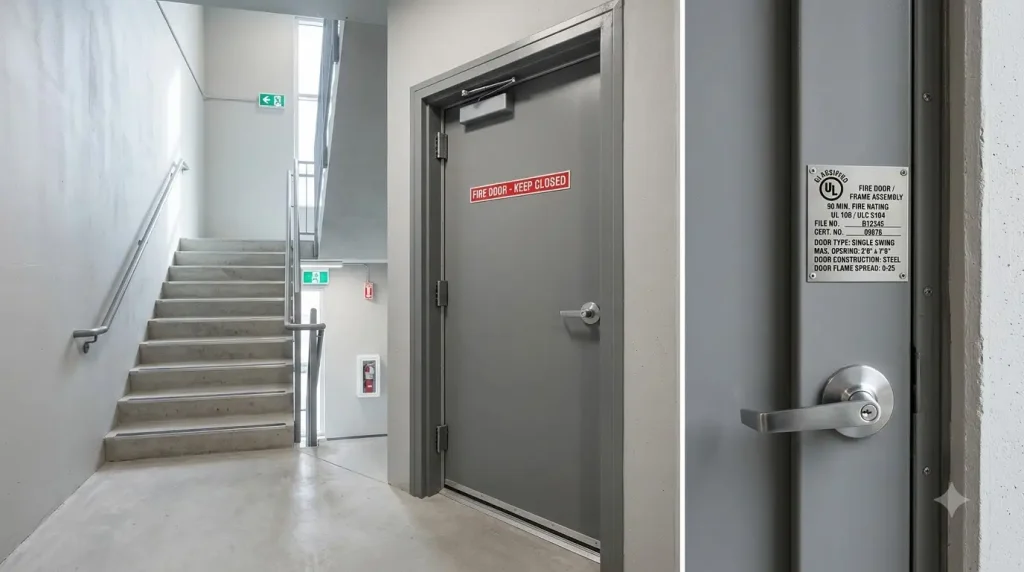
A fire-rated door that hasn’t actually been tested is worse than no fire door at all, because it gives everyone in the building false confidence during an emergency. Yet this happens more often than it should — a builder gets a verbal assurance that a door is “fire rated,” it goes into the building, and nobody checks the paperwork until a fire safety audit comes around and asks for a certificate that doesn’t exist.
This isn’t a general introduction to what fire-rated doors are or why they matter — your building’s fire safety consultant has probably already covered that. This is a checklist for verifying that fire-rated steel doors manufacturers you’re considering can actually back up their claims with documentation that holds up, not just a sales pitch that sounds compliant.
The phrase “fire rated” gets used loosely in the door industry. A door can be built with fire-resistant materials and still not carry an actual rating, because the rating comes from testing the complete assembled unit — door, frame, hardware, and seals together — not from the raw material alone.
This matters because auditors and fire departments don’t take a manufacturer’s word for it. They ask for a test certificate tied to the specific door model installed. If that certificate doesn’t exist, or doesn’t match what’s actually on site, the door doesn’t count as compliant regardless of what it was sold as.
Buildwick provides certification documentation matched to the exact door model supplied, not a general company certificate offered as a substitute. Site teams follow installation guidelines tied to the certified specification, which matters because a fire-rated door installed outside its tested parameters doesn’t perform the way its certificate implies.
For clients managing bulk orders across a building project, Buildwick maintains consistent specification from the first unit to the last, so documentation for one door in a batch genuinely applies to all of them. This consistency is backed by ISO 9001:2015 and ISO 3614 certification on the manufacturing side, alongside product-specific fire testing where applicable. Buildwick’s broader commercial door range follows the same documentation standard, which is worth reviewing if your project needs both fire-rated and standard commercial doors from a single supplier.
If you’re sourcing fire-rated steel doors for a commercial, industrial, or residential project in Hyderabad, talk to Buildwick before finalizing your supplier. We’ll walk you through the exact certification tied to your door specification and confirm it matches your building’s compliance requirements. Get in touch to review your project’s fire door needs.


© 2026 Buildwick. All Rights Reserved.
