Residential Metal Doors Manufacturers — What Homeowners Should Check First

The main door is one of the few things a homeowner replaces maybe once or twice in a lifetime, which is exactly why so many people get it wrong the first time. They compare two quotations, see similar prices, pick the one that looks better in the sample photo, and find out three years later that the hinges have started sagging and the paint is peeling at the edges.

Wood used to be the default choice for main doors across Hyderabad, but termites, humidity-related warping, and rising timber costs have pushed a lot of homeowners — especially in newer apartment complexes and independent villas around Kompally, Miyapur, and Nizampet — toward steel and metal doors instead. The problem is that residential metal doors manufacturers vary enormously in quality, and a door’s real weaknesses rarely show up until well after installation. This guide covers what to actually check before you order one for your home.

Why More Homeowners Are Choosing Metal Over Wood

Wooden main doors look warm and traditional, but they come with maintenance demands that many homeowners underestimate — periodic polishing, termite treatment, and vulnerability to warping when Hyderabad’s humidity swings between the dry summer heat and the monsoon.

Metal doors, done right, sidestep most of these issues. They don’t warp, they don’t attract termites, and a good powder-coated finish holds up for years with minimal upkeep. The tradeoff is that a poorly manufactured metal door can rust, dent, or develop hinge problems just as easily as a badly made wooden one — the material alone doesn’t guarantee quality. The manufacturer does.

What to Check Before Choosing a Residential Metal Door Manufacturer

1. Steel Gauge

Ask for the exact sheet thickness in mm rather than accepting “solid steel” as a description. Main doors typically need a heavier gauge than internal doors, since they take daily impact from weather and regular use.

2. Core Material

Some residential metal doors use a hollow steel construction, while others have a rigid foam or honeycomb core. The core affects sound insulation, weight, and how solid the door feels when closed — worth asking about specifically rather than assuming.

3. Finish and Rust Protection

This is where most cheap doors fail first. Ask whether the door goes through a rust-primer stage before the final powder coat. A door without proper priming can show rust spots within a single monsoon season, especially on exposed-facing homes.

4. Hinge and Lock Quality

A main door’s weak point is almost always the hardware, not the panel. Check the hinge load rating and whether the lock mechanism is built for daily residential use or a lighter-duty grade meant for internal doors.

5. Design and Customization Options

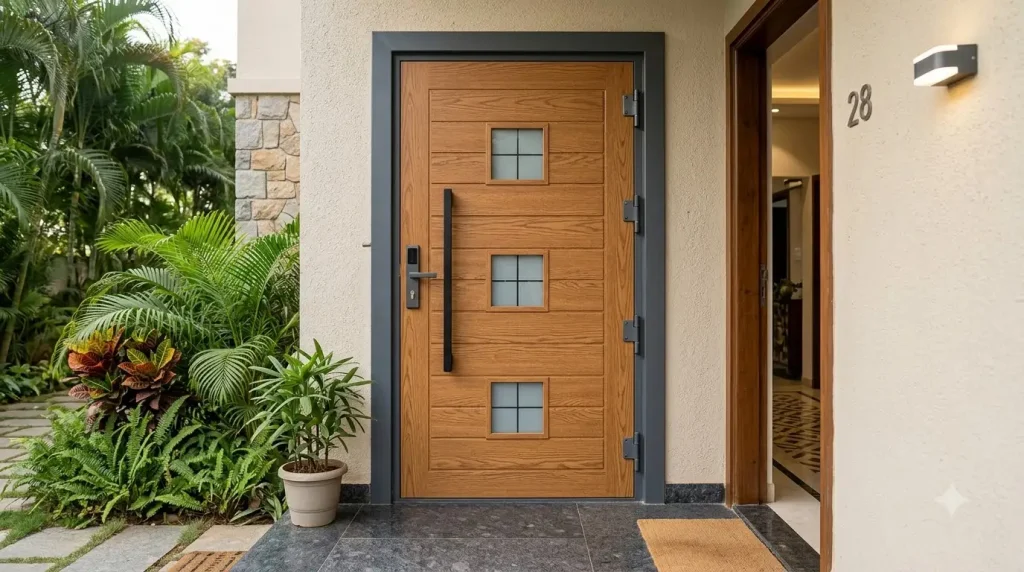
Residential buyers often want a main door that doesn’t look institutional. Ask what design, panel, and finish options the manufacturer offers — some can replicate a wood-grain texture or traditional carved-panel look in steel, which suits homeowners who want the durability of metal without losing the aesthetic they’re used to.

6. Site Measurement Before Fabrication

A main door opening that’s off by even a few millimeters causes fitting problems at installation. Insist on an actual site visit rather than a door fabricated purely from phone-quoted dimensions.

7. Warranty Coverage

Get specifics on what’s covered — the panel, the coating, and the hardware are often covered differently, and a vague “one year warranty” doesn’t tell you much until you actually need to use it.

Benefits of Choosing a Reliable Residential Metal Door Manufacturer

  • Long-term durability — a well-made steel door easily outlasts wood in Hyderabad’s climate, with far less maintenance.
  • Better security — heavier gauge steel and proper locking hardware make forced entry significantly harder than with a standard wooden door.
  • Low upkeep — no termite treatment, no periodic polishing, no warping concerns during monsoon.
  • Design flexibility — modern fabrication techniques mean metal doors no longer look purely industrial; many replicate traditional aesthetics.
  • Consistent quality on bulk orders — useful for builders fitting main doors across an entire apartment complex, where every unit needs to match.

Why Choose Buildwick for Residential Metal Doors

Buildwick fabricates residential doors to the exact gauge and finish specified for each order, rather than defaulting to a generic “heavy duty” description that varies from batch to batch. Every residential door order starts with an actual site measurement, which is why fitting issues at installation are rare rather than something clients have to work around.

Hinges and locks are specified for daily residential use, not downgraded from lighter commercial stock, and the powder coating goes through a proper rust-primer stage before the final finish — the detail that decides whether a door still looks new after its third monsoon. For homeowners weighing steel against wood for a main door, it’s worth looking at how the two materials actually compare before deciding.

Latest Trends in Residential Metal Door Design

  • Wood-textured steel finishes are increasingly popular, giving homeowners the look of a traditional wooden main door with the durability of steel underneath.
  • Smart lock integration is now a common request, with manufacturers pre-reinforcing door frames to support digital and biometric locks.
  • Slim-profile steel doors with minimalist framing are gaining ground in newer apartment developments with contemporary architecture.
  • Two-tone and textured powder coatings are replacing flat, single-color finishes as homeowners look for doors that feel less “industrial.”
  • Acoustic-rated residential doors are showing up in noisier urban pockets where sound insulation from traffic or neighboring units matters.

Common Mistakes Homeowners Make When Buying a Metal Door

  • Comparing quotes without matching gauge specifications — a thinner sheet quoted at a lower price often looks identical on paper but performs very differently over time.
  • Skipping the rust-primer question — assuming powder coating alone prevents rust, when the primer stage underneath is what actually matters.
  • Ignoring hinge and lock specifications — focusing entirely on the door’s appearance while the hardware, which fails first, gets no attention.
  • Ordering without a site visit — leading to a door that doesn’t fit the actual opening and requires costly on-site adjustment.
  • Choosing the cheapest option without checking warranty terms — a low upfront cost often means no real recourse when something goes wrong within the first year.

Expert Tips Before You Order

  • Ask to see a physical sample panel rather than relying on a catalog photo — this reveals gauge, weld quality, and finish far better than a spec sheet.
  • Request photos of past residential installations, ideally in homes with similar exposure to sun or rain as yours.
  • Confirm the warranty in writing, broken down by panel, coating, and hardware separately.
  • If you’re choosing between steel and wood, weigh maintenance cost over ten years, not just the upfront price difference.
  • For apartment complexes ordering in bulk, confirm the manufacturer can maintain consistent specification across every unit, not just the sample shown.

Questions

Upfront costs vary by design and gauge, but metal doors generally cost less to maintain over time since they avoid termite treatment, periodic polishing, and warping repairs that wooden doors often need.
Yes, many manufacturers now offer wood-textured finishes and traditional panel designs in steel, giving homeowners a familiar look with the durability of metal.
With proper gauge, rust protection, and installation, a well-made steel main door can last well over a decade with minimal maintenance, though this depends heavily on manufacturing quality.
Rusting is usually a sign of inadequate rust-priming before the final coat, not an inherent flaw of steel doors. A properly primed and powder-coated door resists corrosion well even through monsoon exposure.
Generally yes — heavier gauge steel combined with a quality locking mechanism is harder to force open than a standard wooden door, though the security also depends on the hardware specified.
Most manufacturers can fabricate to custom dimensions and offer various panel and finish designs, which is useful for older homes with non-standard door openings or specific aesthetic preferences.
Metal doors need far less upkeep than wood, but periodic checks on hinges and touch-ups to the coating if scratched help maintain both appearance and rust resistance over the years.
Yes, most manufacturers offer volume pricing for bulk orders, which is common for builders fitting main doors across multiple units in an apartment complex, provided specifications are confirmed upfront for consistency.

Conclusion

A main door isn’t a purchase most homeowners make often, which is exactly why it’s worth getting right the first time. The details that matter — steel gauge, rust priming, hinge quality, and a genuine warranty — rarely show up in a quick comparison of quotes, and that’s precisely why so many homeowners end up with a door that looks fine on day one and shows problems within a year or two. A little scrutiny upfront costs nothing and saves considerably more down the line.

Strong Call-to-Action

If you’re comparing residential metal doors manufacturers for your home or an apartment project in Hyderabad, talk to Buildwick before you finalize your order. Share your door size, design preference, and exposure conditions, and we’ll recommend the right specification for your home. Get in touch for a site visit and a detailed quotation, or learn more about Buildwick and our manufacturing standards.